“Spider-Noir” is a love letter to early cinema
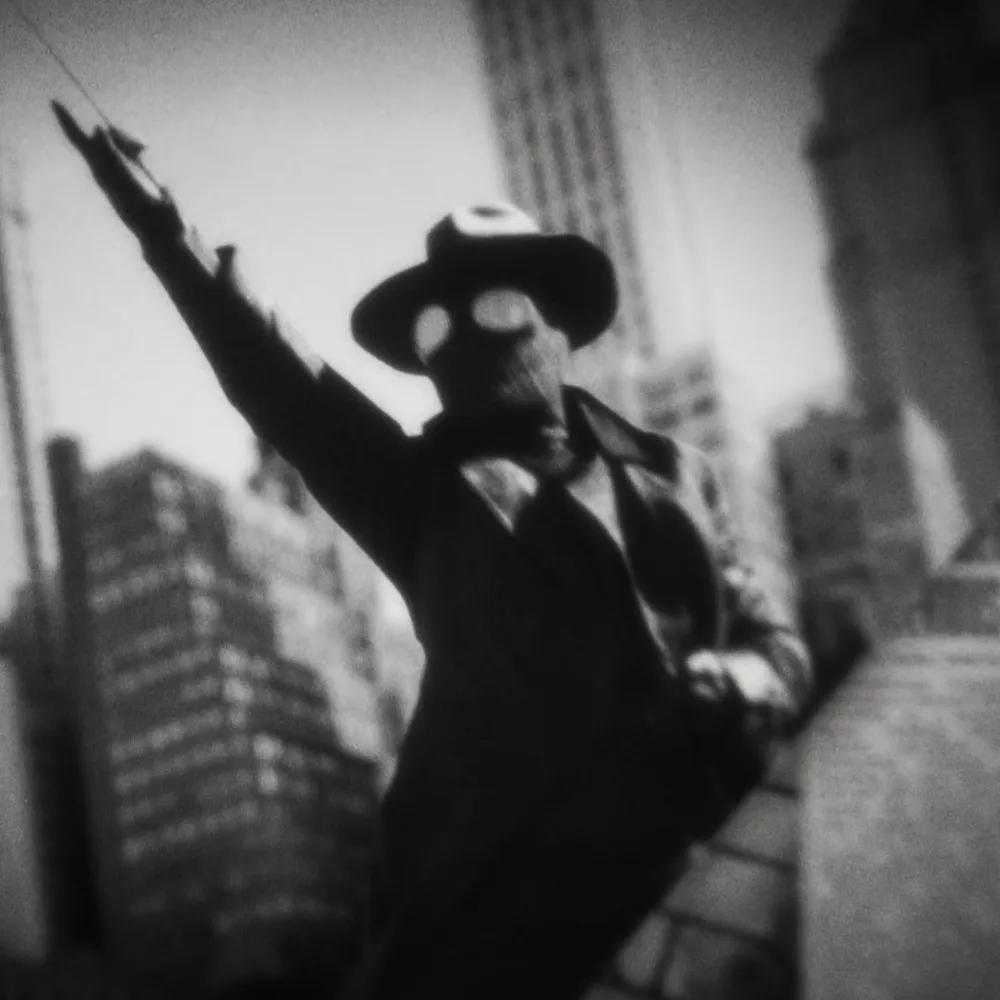
I’m heavily biased, seeing as Spider-Man is my favourite superhero1, but Spider-Noir is doing everything right. The cinematography, the soundtrack, the fight choreography, the smoking-hot femme fatale, the costumes, the name-checking of older films, the presence of corporations that no longer exist, and the origin stories established during the Great War. It is absolutely perfect, and if you too share an interest in the history of filmmaking2, you’ll get a kick out of this series.
The thing I enjoy most about it is the choice to release it in two grades — one in a true-to-noir black and white, and another in a palette reminiscent of early Technicolor. I wish that streaming services did cool stuff like this more often; prove that they know that audiences want specificity over how they watch their films. Perhaps let those of us with 4K HDR displays and surround sound-compatible headphones enjoy the content at its very best, instead of relegating us to a choice between a substandard web video player or a lazily ported app that is more tracking and surveillance code than it is a streaming service? I digress.
I’m only halfway through the series, but I am already in love with it. I know not what the future holds for it, but I hope that there is more of it. I still can’t get over the fact that Nicolas Cage — whose stage name is a reference to Luke Cage — gets to perform as one of Marvel’s most beloved characters, and I adore that everyone simply refers to his superhero persona as “the Spider”.
I have the Raimi films to thank for that. I’d like to think that other kids who grew up in the early 2000s would feel the same.↩
An interest that I developed after taking a photography class in high school, during which I also first experienced the Macintosh, iMovie, and Photoshop. My first impressions of the Mac were deeply rooted in the creative arts.↩